
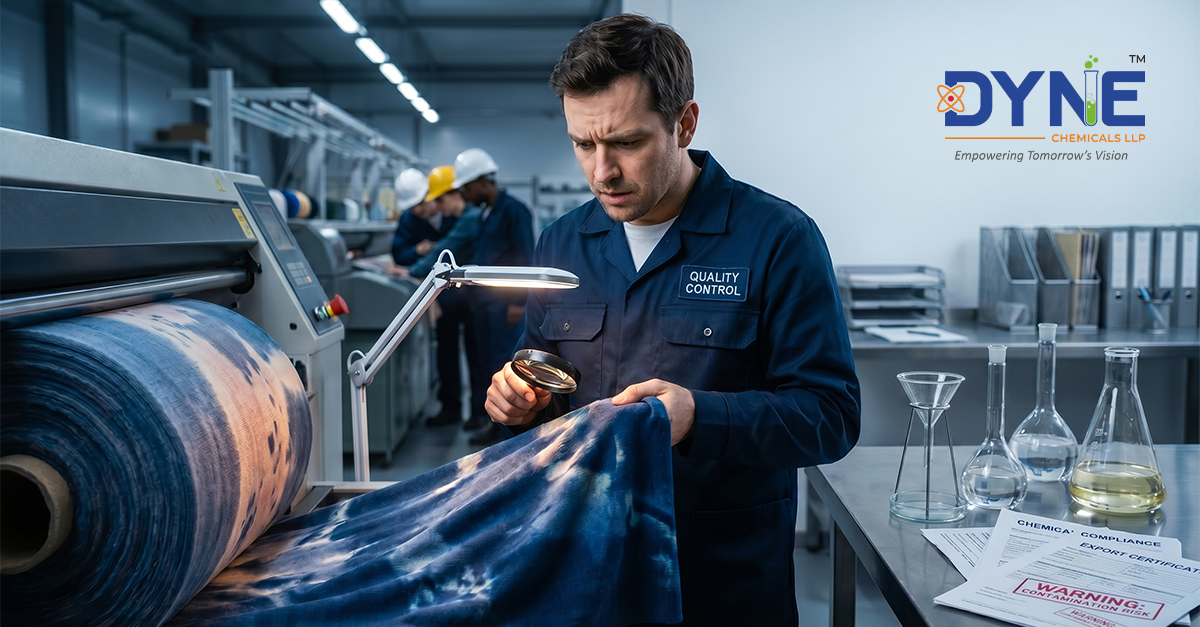
Let’s be honest. Most textile manufacturers don’t think much about their chemical supplier until something goes wrong. A batch comes out with uneven colour. The softener doesn’t perform like it did last season. Or a global buyer flags a compliance issue and you are scrambling to find paperwork. By that point, the damage is already done.
The truth is, your textile chemical supplier has a bigger impact on your business than most people give them credit for. They are influencing your fabric quality, your export certifications, your production efficiency, and ultimately, your reputation with buyers. So it’s worth getting this decision right from the start.
Here’s what we’ve seen work, and what to watch out for.
1. Know what you actually need first
Before you even start comparing suppliers, get clear on your own requirements. Are you primarily working on pigment printing? Reactive dyeing? Finishing for export markets? The answers will determine what kind of supplier makes sense for you. A mill focused on high-volume pigment printing has very different needs from one doing specialty finishing for performance wear.
Look for a supplier who has real depth in your area rather than just a product on a list. If they can talk through your specific substrate and process challenges without reading off a brochure, that’s a good sign.
2. Don’t skip the certifications check
This one seems obvious, but you would be surprised how many manufacturers skip it, or just take the supplier’s word for it. If you are exporting to Europe, the US, or working with global brands, GOTS compliance isn’t optional. ISO 9001 tells you they have a quality system in place. OEKO-TEX ECO PASSPORT or ZDHC compliance matters if your buyers are sustainability-conscious (and these days, most of them are).
3. Eco-friendly is no longer a nice-to-have
We hear from a lot of manufacturers who still treat sustainability as a premium category, something for the big brands, not for their production floor. But that thinking is changing fast. Buyers are tightening their restricted substance lists. Regulations are getting stricter. And frankly, eco-formulations have gotten a lot better. Zero-formaldehyde binders, APEO-free surfactants, and enzyme-based pretreatment systems now perform just as well as the older chemistry, sometimes better.
A supplier who is investing in sustainable chemistry today is also a supplier who will not leave you scrambling when the next regulation kicks in.
4. Good technical support changes everything
Here is something that often gets underestimated. The support you get after the sale matters. When you are troubleshooting a print that will not fix correctly at 3 PM on a Thursday, you do not want to be emailing a generic inbox. You want someone who knows your process, understands the chemistry, and can actually help.
When evaluating suppliers, ask directly: who will be my point of contact? Can I reach someone for technical queries? Have they worked with my type of fabric or process before? The answers tell you a lot about what the relationship will look like when things get difficult.
A good supplier will sometimes tell you that their product is not the right fit for a specific application and point you in the right direction instead. That kind of honesty is rarer than it should be, and worth a lot.
5. Batch consistency matters more than you think
One thing that does not get talked about enough is how much variation between chemical batches can affect your production. If your binder or thickener shifts slightly in viscosity or solid content from one delivery to the next, your print results will shift too. This is especially painful when you are trying to match a shade across a large order.
Ask potential suppliers how they handle batch testing. Do they share certificates of analysis? What are their tolerances? Have existing clients had issues with consistency? These questions might feel detailed, but they save you a lot of headaches down the line.
6. Price matters, but it is not the whole story
We get it. Cost is real. But a cheaper chemical that requires a higher add-on percentage, causes colour variation, or fails a buyer’s quality check is never actually cheaper. Calculate what you are spending per metre of fabric treated, not just per kilogram of chemical. That gives you a much clearer picture of actual value.
Also factor in what is included. Do you get technical support, sample availability, reasonable MOQs, and reliable lead times? Sometimes the slightly more expensive supplier saves you significantly more in production efficiency and rework.
7. Always test before you commit
No matter how convincing the data sheet looks, run your own trials. Test the product under your actual process conditions, your water quality, your temperatures, your substrate. What works perfectly in one factory might behave differently in yours. Any supplier worth partnering with will send you samples without making it feel like a favour.
This step alone has saved manufacturers from very costly mistakes. Build it into your standard evaluation process every time.
So, how do you find the right one?
There is no universal answer, but the best textile chemical supplier for your business is one who understands your production challenges, stands behind their products with real documentation, offers genuine technical support, and is thinking about where the industry is heading, not just what sells today.
At Dyne Chemicals, that is exactly how we work. With experienced team in sustainable textile chemistry and a product range covering printing inks, binders, fixers, thickeners, and auxiliaries, we partner with manufacturers who want consistency, compliance, and a supplier they can actually count on. If that sounds like what you are looking for, drop in your inquiry and we would be happy to connect.
FAQs
Look beyond just price. The most important factors are product quality and batch consistency, relevant certifications (ISO 9001, GOTS, OEKO-TEX ECO PASSPORT), technical support availability, sustainable product options, and reliable delivery timelines. A supplier who can talk through your specific process challenges, not just hand you a data sheet, is usually a much better long-term partner.
A block silicone softener releases its softening action gradually and in a controlled way during curing, giving manufacturers more predictable and even results. Regular unblocked silicone can release its effect too quickly, which can sometimes cause an uneven or greasy feel if not handled carefully.
If you are exporting to European markets or supplying global brands with European operations, though GOTS and OEKO-TEX compliance is not legally mandatory, it’s de-facto mandatory. It ensures that the chemicals in your supply chain meet strict safety and environmental standards. Even if you are not directly exporting to Europe, many Indian and Asian buyers now require it as part of their own supplier audits.
Ask for original certificates and verify them with the issuing body if possible. Request references from existing clients in a similar production setup. Check whether they have a physical manufacturing or R&D facility. Run samples under your own process conditions before placing a bulk order. A genuine supplier will not hesitate to provide any of this. The ones who do should raise a flag.
Even small variations in a chemical’s composition between batches can affect your dyeing or printing outcome, causing shade differences, handle variation, or fastness issues. This is particularly critical for repeat orders or large production runs where consistency is non-negotiable.
Yes. Modern sustainable formulations have improved dramatically. Zero-formaldehyde binders, APEO-free surfactants, and enzyme-based systems now deliver performance that matches or exceeds older chemistry in many applications.
Textile auxiliaries are process-supporting chemicals such as wetting agents, softeners, levelling agents, and thickeners that help other chemicals work more effectively without permanently altering the fibre. Specialty chemicals include dyes, pigment binders, fixers, and finishing agents that directly impact the fabric’s properties.
Very important. Technical support means having access to someone who understands your chemistry and can help you troubleshoot process issues, optimize dosages, and adapt formulations to your specific conditions.

Mr. Yash Patel
Yash has spent over a decade and a half working in the manufacturing and marketing of textile-based printing inks, binders, auxiliaries and specialty chemicals. He combines deep technical understanding with an entrepreneurial vision to build sustainable and globally competitive textile chemical solutions.
View Full Bio